

Using a wrist blood pressure monitor is similar to using an upper arm monitor, but there are a few differences in the technique. Here's a step-by-step guide:
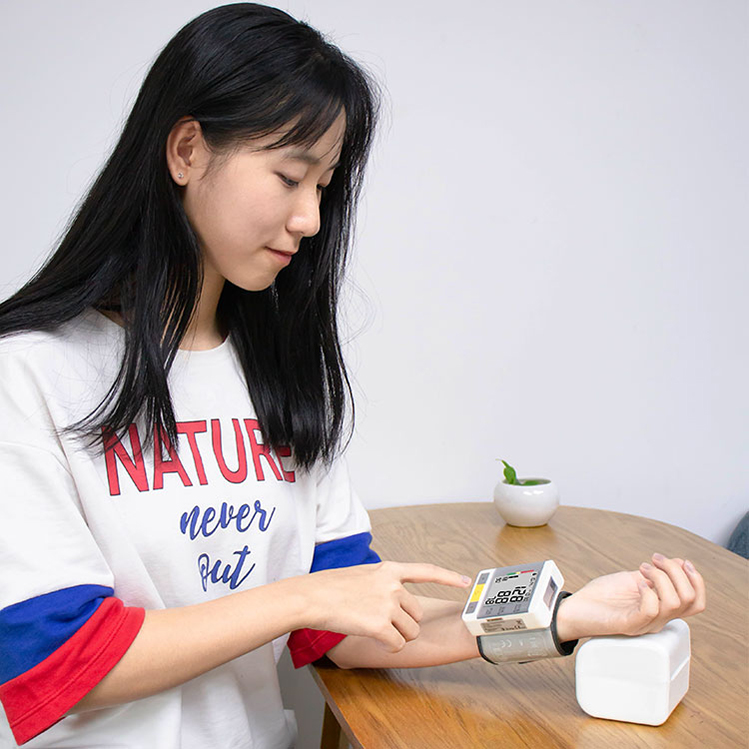
Select the Right Monitor: Make sure you have a wrist blood pressure monitor. Unlike upper arm monitors, wrist monitors are worn on your wrist.
Prepare for Measurement: Sit comfortably in a chair with your feet flat on the ground. Rest your arm on a table or flat surface with your palm facing up. Your wrist should be at heart level.
Position the Wrist: Slip the cuff onto your wrist, positioning it just above the wrist bone. Make sure it's snug but not too tight. The monitor should be positioned at the same level as your heart.
Secure the Cuff: Fasten the cuff securely, ensuring it's not too loose or too tight. It should be snug enough to stay in place during the measurement.
Stay Still and Quiet: Relax your arm and hand, keeping them still during the measurement. Avoid talking or moving unnecessarily, as this can affect the accuracy of the reading.
Start the Measurement: Press the start button on the monitor to begin the measurement. The cuff will inflate, temporarily stopping the blood flow in your wrist. You may feel some pressure, but it shouldn't be painful.
Wait for the Reading: As the cuff deflates, the monitor will measure your blood pressure. This usually takes about 20-30 seconds. Remain still and quiet during this time to ensure an accurate reading.
Read the Results: Once the measurement is complete, the monitor will display your blood pressure readings. This typically includes both systolic (top number) and diastolic (bottom number) pressures, measured in millimeters of mercury (mmHg).