

When comparing different brands and models of blood pressure (BP) monitors to make an informed decision, it’s important to focus on a combination of performance, features, reliability, cost, and ease of use. Below are key factors to consider in order to select the optimal BP monitor for either personal use, clinical use, or distribution in the healthcare market:
1. Accuracy and Validation
- Validation against Standards: Ensure that the BP monitor is validated according to international guidelines, such as ISO 81060-2, or clinical validation standards like those set by the American National Standards Institute (ANSI), the European Society of Hypertension (ESH), or the Association for the Advancement of Medical Instrumentation (AAMI).
- Clinical Accuracy: Look for devices that have been clinically tested and proven accurate in real-world conditions. Some monitors have been independently validated in clinical trials and studies, which can offer reassurance about their reliability.
- Consistency in Readings: Ensure the device provides consistent results across multiple readings. If possible, test multiple units from different manufacturers to see how well they perform under identical conditions.
2. Ease of Use and User Experience
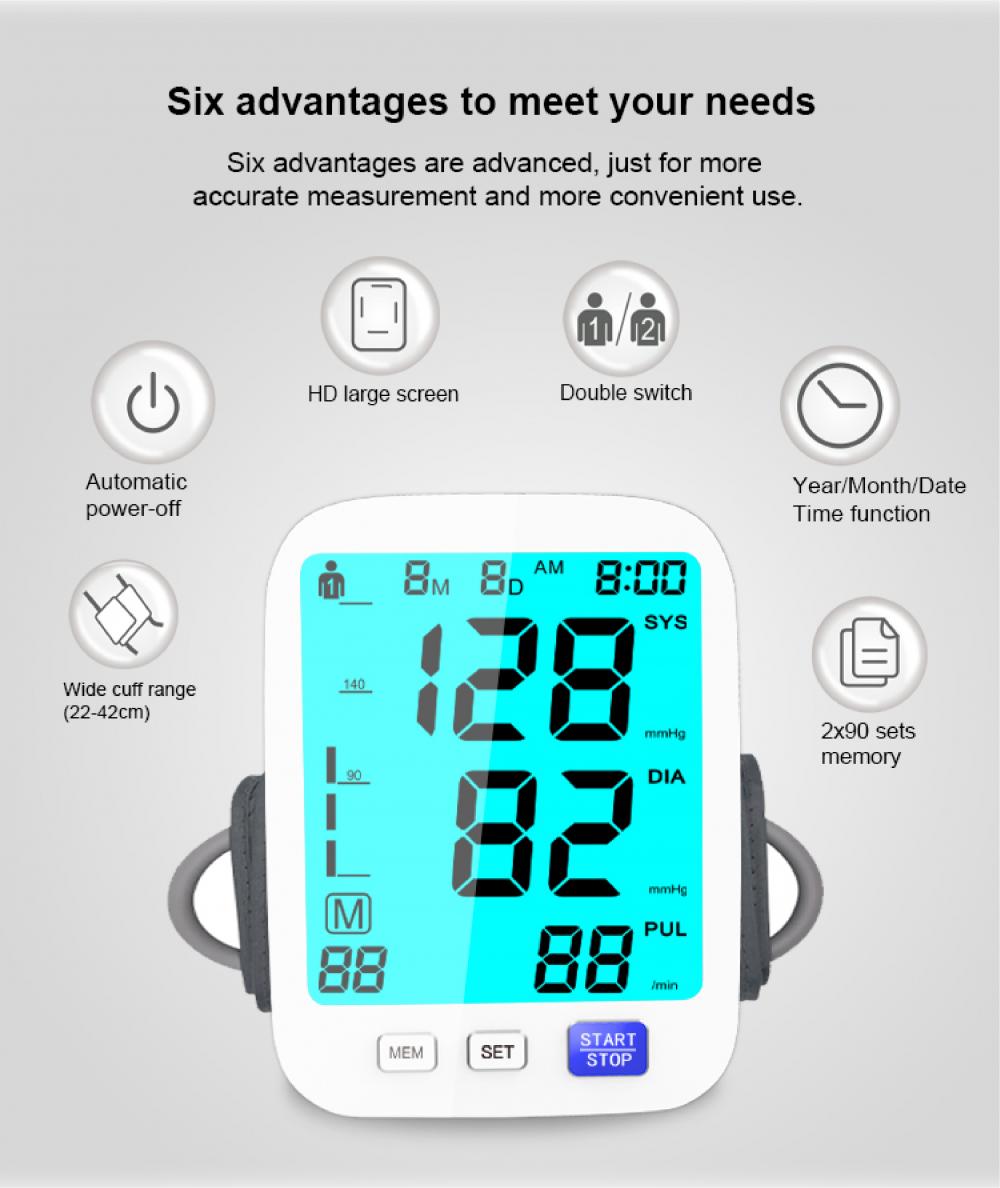
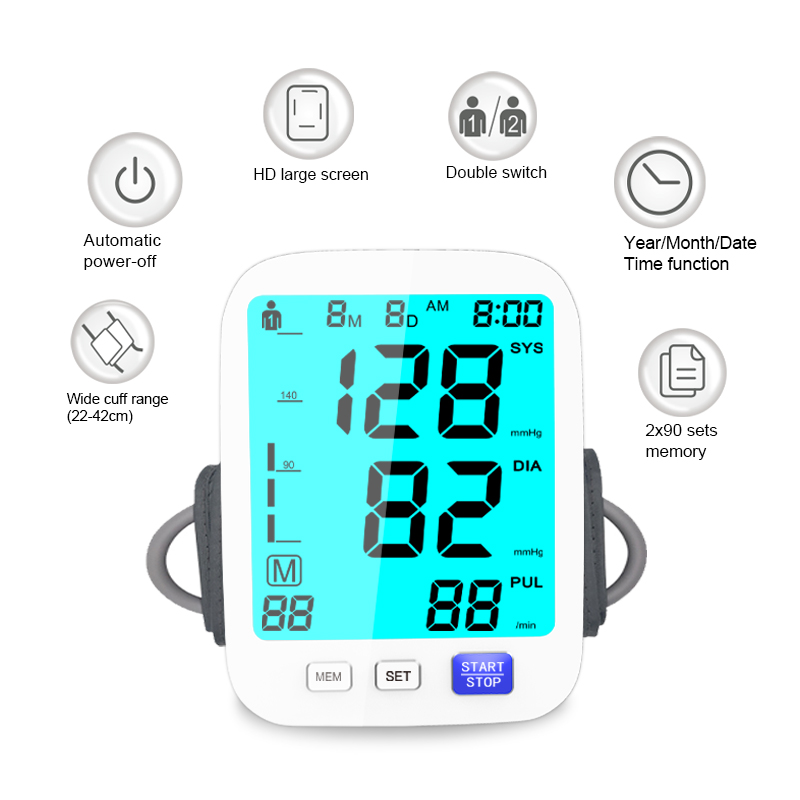
- Display: The monitor should have a clear, easy-to-read display with large numbers, especially for elderly users or those with vision impairments. Backlit displays are especially helpful in low-light conditions.
- Cuff Design and Comfort: Check for cuff size options and ergonomic design. The cuff should be easy to put on and adjust, with a good range of sizes to fit different arm circumferences. A comfortable cuff minimizes discomfort and enhances the user experience.
- One-Touch Operation: A simple, intuitive interface with one-button operation is a key feature for ensuring ease of use, particularly for elderly or technology-averse users.
- Voice Assistance: Some models feature voice readouts of BP readings, making them especially beneficial for visually impaired users.
3. Advanced Features
- Arrhythmia Detection: Monitors with arrhythmia detection can alert users to irregular heartbeats, helping to identify potential cardiovascular issues early.
- Multiple User Profiles: Some devices store measurements for multiple users, which is useful in households or clinics where more than one person will be using the monitor.
- Smartphone Integration: BP monitors that sync with mobile apps via Bluetooth or Wi-Fi enable easy tracking of readings over time. Some apps can even send reports directly to healthcare providers, helping with remote monitoring.
- Wireless Connectivity and Cloud Storage: For seamless integration with electronic health records (EHRs), devices with wireless connectivity can automatically upload readings to cloud storage, ensuring data security and ease of access.
- Data Averaging: Many devices automatically calculate the average of multiple readings taken within a short time period, increasing the reliability of the reading.